 Ever-Power Group


What is the difference between hard gear and soft gear, and how to choose?
Publication time: 2020-02-19 Website: https://ptogearboxes.com Edit: EP
According to the hardness of the gear tooth surface, we can divide the products into hard-tooth surface gears and soft gears. Then, where is the difference between them and how to choose?
1. The bearing capacity of the tooth surface should be related to the hardness of the tooth surface. The higher the hardness, the higher the bearing capacity.
2,Hardened gearHBS>350, soft gear HBS<=350.
3. The hard gear is easy to design, and the soft gear is good in material selection.
4. CommongearFailure: pitting of the tooth surface, fatigue fracture of the tooth root, etc., are all related to the hardness and quality of the gear.
5. Soft-tooth surface gears are generally not heat-treated, and hard-tooth surface gears generally refer to heat-treated gears.The price of the soft tooth surface is relatively cheap due to the lack of a heat treatment process.
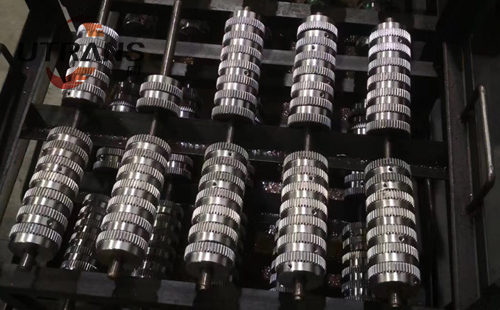
6、20Cr、20CrMnTi、20CrMnVB、20CrNiH等可以采用渗碳淬火热处理提高硬度。
7. 38CrMnAl can use nitriding process to achieve higher hardness.
8、40Cr、45#、45Mn2钢可以采用最终热处理高频回火或者氮化处理提高硬度。
9. Soft gears are usually gear blanks that are cut after heat treatment, and they are finished products after cutting.The accuracy is generally 8 grades, and it can reach 7 grades for fine cutting.
10. Gears with soft tooth surfaces have low load-bearing capacity, but they are easy to manufacture, economical, high in productivity, and have good running-in. They are mostly used in general machinery with no strict restrictions on transmission size and weight, and small-volume production.
11. The hard-tooth surface gear has a high load-bearing capacity. After the gear is cut, it is quenched, surface quenched or carburized and quenched to increase the hardness.The hard tooth surface has large transmission load, wear resistance and long service life, and is widely used.
12. Generally, in order to make the working life of large and small gears roughly equal, the hardness of the tooth surface of the small gear is 30-50HBC higher than that of the large gear.
13. If you have no special requirements on the hardness of the gear product, you can use soft gears for low-power, low-strength and precision equipment, and low-to-medium-speed transmission equipment; and if the product hardness will greatly affect the performance of the transmission system Impact, then you'd better choose hard-toothed gears.All of this can be learned by communicating with engineers, so I won't go into details here.If you have any unclear points or related processing requirements, you can consult EP Technology for free.
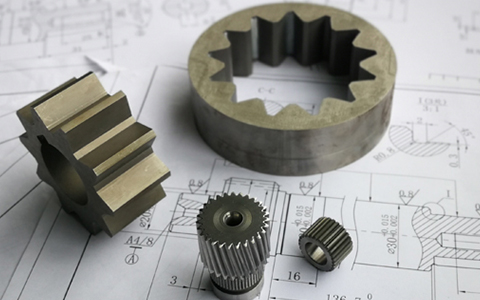
![Oil pump gear [customized]](ptogearboxes/xiaoE/upload/file/img/2020/10/5f9a8130d4e57.jpg)
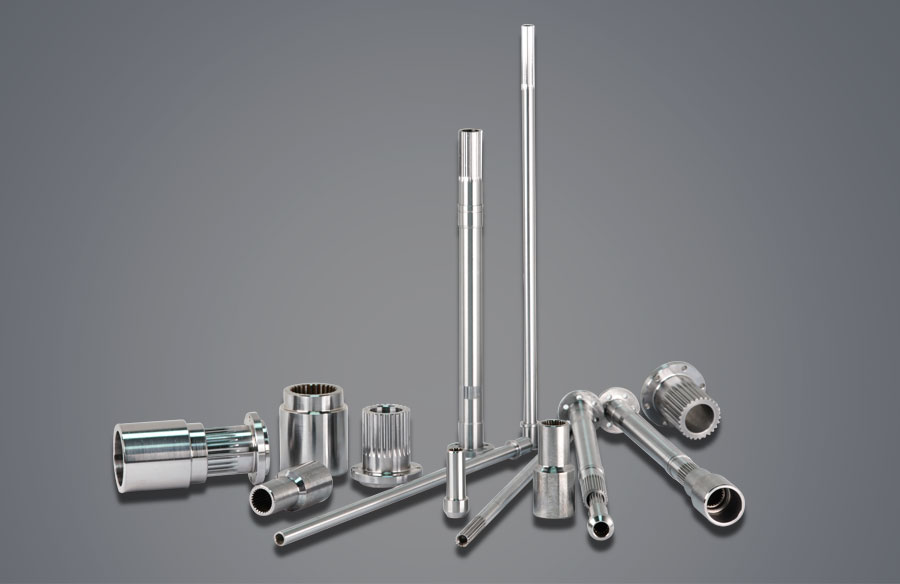
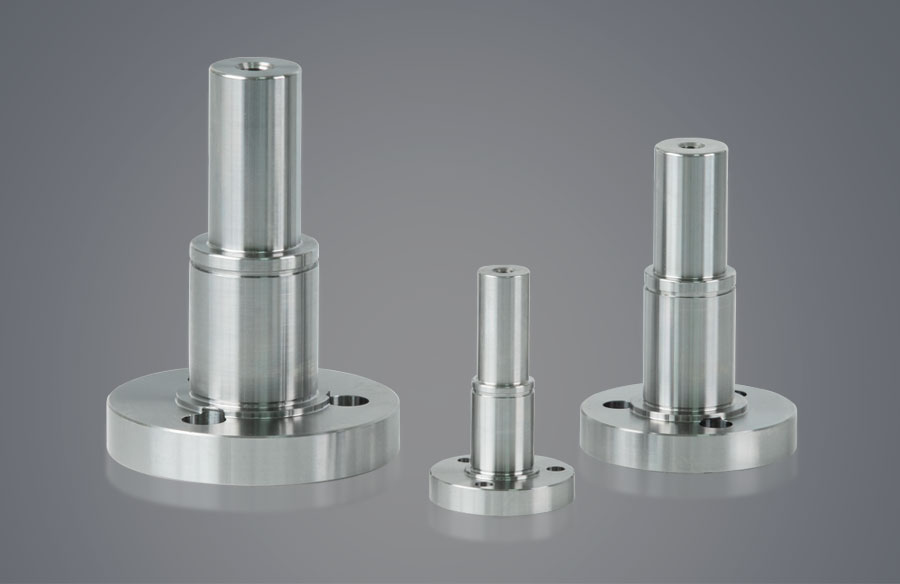
![Encoder gear [customized]](ptogearboxes/xiaoE/upload/file/img/2020/10/5f9a7c8ae4b27.jpg)