 Ever-Power Group


Do you know the 7 major reasons that affect gear noise?
Publication time: 2020-04-29 Website: https://ptogearboxes.com Edit: EP
XNUMX. Product Type
Different types of gears, due to their different geometric characteristics, will have different forms of meshing process.
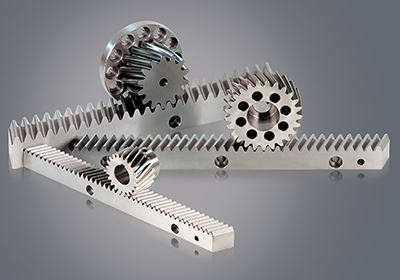
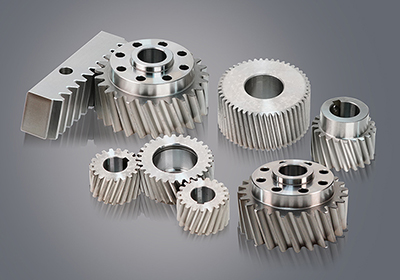
For example: under the same condition of load and speed,helical gearComparable noiseSpur gear3~10dB lower.
XNUMX. Pressure angle
In order to transmit a certain amount of power, keep F at a constant value.If the pressure angle a is increased, the normal force Fn of the tooth surface has to be increased, which will increase the pitch line impulse and mesh impulse on the actual tooth surface with friction, resulting in an increase in vibration and noise levels.
althoughgearThe center distance error does not affect the accurate meshing of the involute tooth profile, but its change causes the working pressure angle to change periodically.
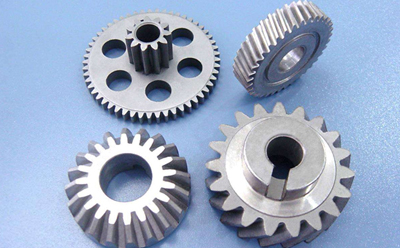
For example: the eccentricity of the gear on the shaft, the rotation frequency of the gear is changed to change its center distance, which will inevitably modulate the frequency of vibration and noise of the gear transmission, and the amplitude of the modulation will depend on the amount of eccentricity.
XNUMX. Gear parameters, structure shape
1. Tooth blank structure
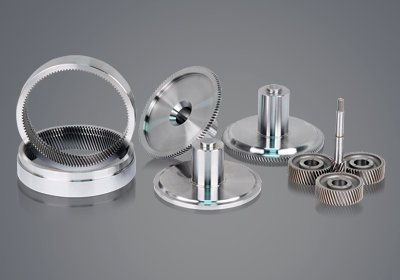
Cylindrical gear blanks generally have two kinds of structural shapes: integral shape and spoke shape.
The spoke-shaped tooth blank has higher noise.The negative ring can be used to reduce the noise of the web-shaped tooth blank, and the thick tooth blank has better amplitude attenuation performance.
2. Gear diameter
If the cylindrical gear is regarded as a circular plate, the noise radiated around it depends on its acoustic radiation area according to the principle of acoustics, so increasing the product diameter will reduce the disadvantages of noise.
3. Tooth width
The tooth width is directly proportional to the bending change of the gear teeth.
The noise decreases as the tooth width increases, but for gears with poor machining accuracy, bending deformation under a large load has little effect on increasing the tooth width.
Therefore, the teeth impulse and noise are not reduced.
In addition, increasing the tooth width will easily increase the tooth orientation error caused by the manufacture and installation of the gear, which will have a great impact on reducing the meshing impulse and noise.
Fourth, gear accuracy
1. Tooth surface roughness and concentration
Gear error has a great influence on noise, especially in this area with high meshing frequency, the sound pressure level is quite high, making unpleasant sounds.
2. Tooth shape
Only the magnitude of the tooth profile error can not be judged its influence on the noise. The most important thing is the error shape of the tooth profile.
For example, the "concavity" near the node will increase the noise a lot.
3. Tooth pitch
The noise increases and decreases in direct proportion to the error of the base pitch. When the speed increases or the load increases, the gradient of the noise increase or decrease also increases. Moreover, in a gear revolution, even if there is a large pitch error, the noise increases significantly. Big.
4. Radial runout of ring gear
Due to the modulation of the sound, a variety of squeal sounds are sometimes produced in the gear noise. The eccentricity causes continuous changes in the circumference, and produces long-period noise related to the gear rotation frequency. The human ear is very sensitive to this, especially at high speeds. Big.
Gear noise is greatly affected by product accuracy. The first step to reduce gear noise is to improve product accuracy. For gears with extremely low accuracy, any other noise reduction measures are futile.
Among the individual errors, the two items that have the greatest impact are the pitch (base or circumferential) and tooth profile.
XNUMX. Tooth profile modification and tooth direction modification
Due to the deviation and elastic deformation of the gear teeth between the circumferential pitch and the base pitch, when the gear meshes in or out, the impact and the change of angular velocity are caused by the interference of the top edge meshing.
When the peripheral section or base section of the passive wheel is larger than the nominal value, the top edge meshing will occur at the tooth top of the passive wheel, which will cause vibration and noise.
Tooth surface modification is to modify the gear teeth into a drum-shaped tooth, so that the middle part of the tooth width is first contacted when loaded, and then expanded to the entire tooth width to improve the load distribution and help reduce vibration and noise.
Sixth, the degree of coincidence
The gear teeth have varying degrees of change when they transmit loads.In this way, the meshing impulse along the meshing line will be generated at the moment of entering and disengaging, thus causing torsional vibration and noise.
If you increase the average number of teeth at an instant, that is, increase the coincidence degree, the load can be distributed to more teeth, so that the unit pressure of the tooth surface is reduced, thereby reducing the deformation of the teeth, and improving the impact when entering and disengaging. Therefore, the torsional vibration and noise of the gear drive are also reduced.
重合度由1.19增大至2.07时在1000rpm时降低噪音4dB,而在2000rpm时降低噪音6dB。
For helical gears, the degree of coincidence can be increased by changing the helix angle β and the tooth width b, and it can greatly exceed the spur gear, but the helix angle should not be too large, otherwise it will cause axial vibration.
Increasing the number of teeth, increasing the addendum height coefficient or reducing the pressure angle can increase the coincidence degree, reduce vibration and reduce noise.
Seven, processing technology
1. Honing
The role of gear honing is mainly to improve the surface finish of the tooth profile. The cutting amount is preferably 0.01 ~ 0.02mm, otherwise the original accuracy of the gear will be destroyed.
In this regard, the usual honing process has been improved as follows:
a. During the honing process, the radial pressure must be adjusted appropriately so that the constant pressure between the honing wheel and the workpiece is always maintained.
Generally at 10Kgf.cm, the tool holder is in a floating state, and there is no gap meshing between the honing wheel and the workpiece;
b. The cutting force of the honing wheel itself is related to the material formula of the honing wheel. The epoxy resin and emery abrasives are changed from the original 1:1.6 to 1:1, and the abrasive grains are changed from coarse to fine according to the gear modulus, that is, the original 100 #~200#改150#, this can reduce the cutting performance of the honing wheel and increase the plasticity;
c. In order to be compatible with the shaving drum-shaped teeth, a honing drum-shaped toothed hand plate is used in some gears, which has a greater effect on improving the contact strength of the gear, the smoothness of the transmission and reducing the noise of the product.
2. Shaving teeth
The following two measures are more effective for improving the smoothness of gear transmission, reducing impact and reducing noise.
a. Shaving cutter shaping: gears larger than 55 teeth are processed by standard gear shaving, and products smaller than 55 teeth are processed with a shaping cutter. The amount of modification is small, generally about 0.020mm.
b. For gears with higher rotation speed, drum-shaped gears are used for gears with a drum shape of no more than 0.02mm. For non-drum-shaped gears, it is strongly shown that the contact spots should be controlled in the middle of the tooth shape as much as possible.
3. Gear hobbing
a. After the hob is installed, the radial runout is not more than 0.020mm;
b. Control the radial error of the front edge of the hob before shaving, the equal division error and the cumulative error of the tooth pitch;
c. The radial runout of the ring gear is 1/3 smaller than the standard tolerance, and the runout of the gear end face is also controlled within 0.020;
d. The tooth surface finish is not less than △5.
4. Heat treatment
High-frequency quenching should be used, and quenching procedures should be strictly controlled to reduce gear deformation and create conditions for gear honing.
I believe that after the above explanation, everyone has a better understanding of the causes of gear noise, for reference and understanding, more questions can be directly consulted to EP for free.
![Oil pump gear [customized]](ptogearboxes/xiaoE/upload/file/img/2020/10/5f9a8130d4e57.jpg)
![Encoder gear [customized]](ptogearboxes/xiaoE/upload/file/img/2020/10/5f9a7c8ae4b27.jpg)