 Ever-Power Group


What material is generally used for gear processing?
Publication time: 2020-04-09 Website: https://ptogearboxes.com Edit: EP
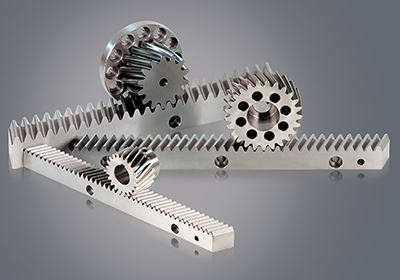
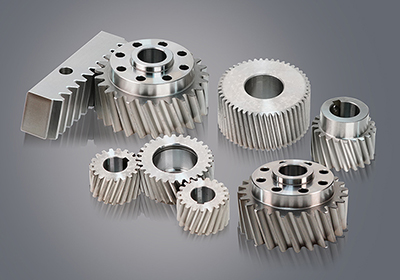
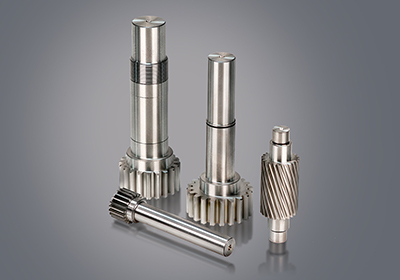
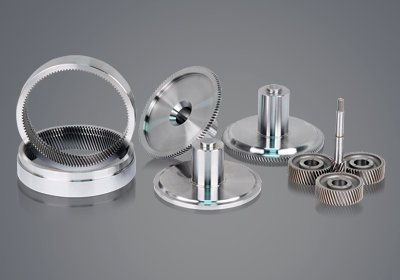
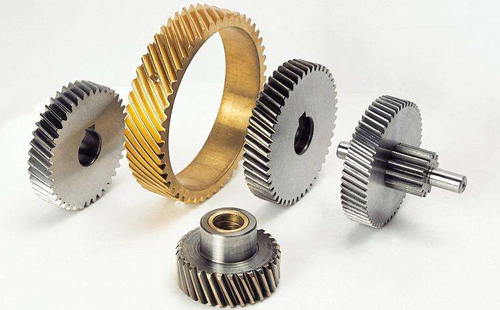
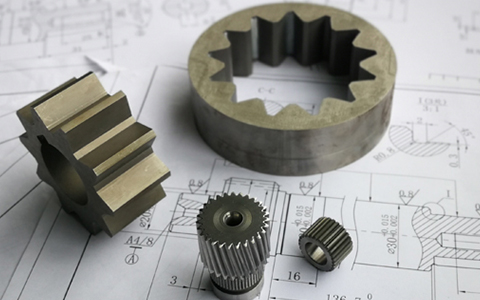
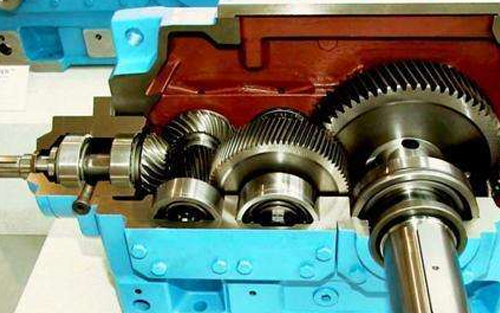
Gears are roughly divided into metal gears and non-metal gears, then,Gear processingWhat material is generally used, how to choose the material, which material is the best, etc. The following are some content descriptions for reference.
Common materials for gear processing:
1. Non-metallic materials:
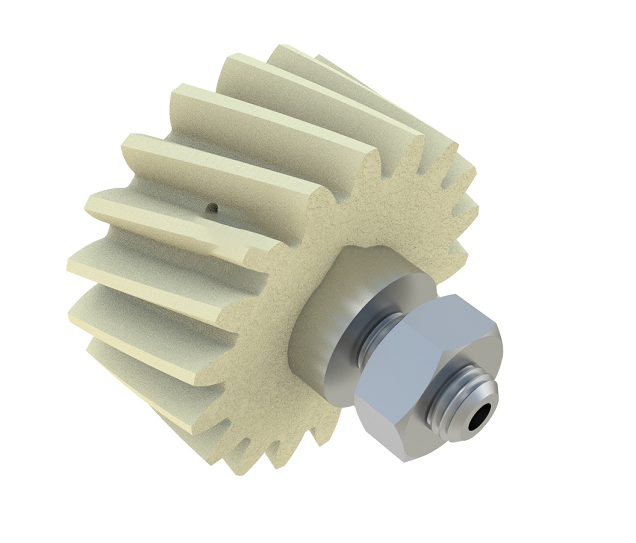
For high-speed, light-load and low-precision gear transmissions, such as cloth bakelite, nylon, etc., non-metallic materials are commonly used in order to reduce noise.
2. Forged steel:
The steel has good toughness and impact resistance. It can also be heat treated or chemical heat treated to improve its mechanical properties and increase the hardness of the tooth surface.
3. Cast steel:
Cast steel has good wear resistance and strength, but it should be annealed and normalized, and quenched and tempered if necessary.Cast steel is often used for larger gears.
4. Alloy steel:
According to the composition and performance of the metal contained in alloy steel, the toughness, impact resistance, wear resistance and adhesion resistance of the material can be improved respectively. The mechanical properties of the material and the hardness of the tooth surface can also be improved by heat treatment or chemical heat treatment. Therefore, for aerospace gears that are high-speed, heavy-duty, small in size, and small in quality, they are all made of alloy steel with excellent performance.
5. Low carbon steel:
When the gear teeth are easily broken when subjected to impact load, materials with better toughness should be selected.
6. Medium carbon steel:
For high-speed closed transmission, the tooth surface is prone to pitting, so materials with better tooth surface hardness should be selected.
7. Carburizing steel:
Use 20cr and 16Mncr5 for carburizing or carbonitriding.After carburizing and quenching, the tooth surface hardness can reach HRc58-63, and the core has high toughness, which is resistant to wear and impact, and is suitable for manufacturing high-speed, medium-load or impact-loaded gears.
8. Duralumin:
High-strength aluminum alloy material, aluminum alloy is lighter, although its strength is basically the same as that of brass, and the winding sensitivity of the operation is also high, but its durability is not as good as that of brass gears.
9. Cast iron:
Gray cast iron is more brittle in nature, poor in impact resistance and wear resistance, but has better resistance to bonding and pitting corrosion.
10. Brass:
The characteristic of brass lies in its good strength and durability, as well as the comfort of shaking transmission. It is suitable for some reels that require high load and the rigidity of the wheel body.
11. Powder metallurgy:
Refers to a material form with a more advanced preparation process that introduces additives into the sintered powder to increase its strength.
Gear processing material selection:
1. Light load gear:
45, quenching and tempering (quenching + high temperature tempering) or normalizing
2. Medium load gear:
40Cr, quenched and tempered + surface quenching of wear-resistant parts
3. Heavy-duty gear:
20Cr, 20CrMnTi, carburizing + quenching (martensite) + low temperature tempering
4. High-precision gears:
38CrMoAIA, tempering-nitriding
The selection of gear material needs to consider factors such as load size, precision transmission, hard tooth surface, tough tooth core, etc. For more information about selection, you can consult EP for free.
![Oil pump gear [customized]](ptogearboxes/xiaoE/upload/file/img/2020/10/5f9a8130d4e57.jpg)
![Encoder gear [customized]](ptogearboxes/xiaoE/upload/file/img/2020/10/5f9a7c8ae4b27.jpg)