 Ever-Power Group


Description of heat treatment process for medium load gears and carburized gears
Publication time: 2020-06-23 Website: https://ptogearboxes.com Edit: EP
The relevant descriptions of the heat treatment process for medium-duty gears and carburized gears are as follows, for reference.
XNUMX. Medium load gear (medium carbon steel) heat treatment (surface hardening)
Suitable for 35~55, 40Cr, 35CrMn, 35CrMo, 42SiMn and other materialsgear.
1. Normalizing (or complete annealing):
Refine the grain, adjust the hardness, heat to Ac3+30~50℃, air cooling, fine pearlite+ (a small amount of ferrite).
2. Quenched and tempered heat treatment:
使心部具有良好强韧性,加热至Ac3+30~50℃后淬火+500~600℃高温回火,回火索氏体。
3. Surface induction hardening (surface flame hardening):
Improve the surface hardness, the surface is heated to Ac3+30~50℃, the core is not heated.Martensite is obtained on the surface after quenching, the transition layer of martensite + S back + retained austenite, tempered sorbite in the core
4. Low temperature tempering:
Eliminate quenching stress, low temperature 200℃, M→M times
20. Carburized gear: Material: 20CrMnTi, 30Cr, XNUMXCrMnTiA, etc.Service occasions: high-speed and heavy-duty (automobile gear)
Process:
1. Normalizing:
The purpose is to refine the crystal grains; adjust the hardness to facilitate cutting, heat to Ac3+30~50℃, air cooling, to obtain fine pearlite+ (a small amount of ferrite).
2. Carburizing:
Increase the surface carbon content, and keep it at 920~930℃ for 3~9h.
3. Quenching after carburizing:
Obtain martensite, improve surface hardness, and quench directly or once.Ideal organization: surface: contact needle M+Ar (small amount) + carbide, heart: low carbon M+F (small amount).
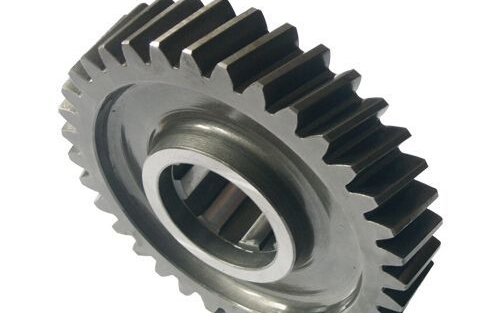
4. Tempering:
Eliminate quenching stress, low temperature 200℃, M→M times
The carburized gear should meet the following requirements after heat treatment:
1、表面层硬度HRC58~63,心部HRC31~45
2. The surface and core should have fine grain structure
3. The surface metallographic structure should be fine needle-like or cryptocrystalline martensite structure, along the grain boundary
Net carbides are not allowed, only a small amount of granular carbides and retained austenite are allowed
4. There should be enough transition layer between the surface and the heart
5. Heart tissue after heat treatment:
Alloy steel, low carbon martensite or low carbon martensite + ferrite;
Carbon steel, pearlite + ferrite
6. Minimize decarburization and deformation
7. In addition to requiring high toughness, the heart must also have high strength.
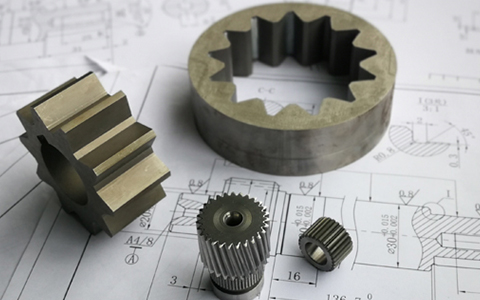
![Oil pump gear [customized]](ptogearboxes/xiaoE/upload/file/img/2020/10/5f9a8130d4e57.jpg)
![Encoder gear [customized]](ptogearboxes/xiaoE/upload/file/img/2020/10/5f9a7c8ae4b27.jpg)