 Ever-Power Group


Worm gear and its basic parameters and functions
Publication time: 2020-05-26 Website: https://ptogearboxes.com Edit: EP
Worm gears and their basic parameters and functions are as follows, for reference and understanding.
Definition of worm gear:
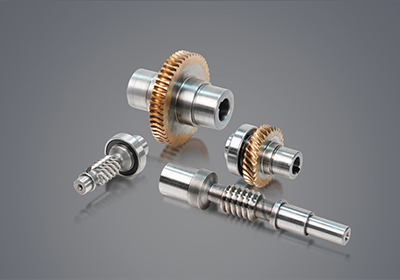
Turbine shaftComposed of a worm and a turbine, it is generally used for decelerating motion, and is mainly used to transmit the motion and power between two interleaved shafts in space. Usually, the interleaved angle of the two shafts is 90°, which is widely used in various mechanical equipment and instruments.
Basic parameters of worm gear:
Number of worm heads, number of worm gear teeth, transmission ratio i, modulus m, pressure angle α, worm index circle diameter d and diameter coefficient q, worm lead angle, turbine helix angle, addendum height coefficient (take 1) and head clearance Coefficient (take 0.2).
Worm gear function:
The commonly used worm for worm gear drives is a cylindrical Archimedes worm. The axial tooth profile of this worm is a straight line and an isosceles trapezoid and a trapezoidal thread similar to the axial section.The number of teeth of the worm is called the number of heads, which is equivalent to the number of threads of the thread, which is usually single-ended or double-ended.In general, the worm is the driving shaft, and the material is high-density alloy steel that is not easy to wear. The worm wheel is the driven shaft and the material is bronze.
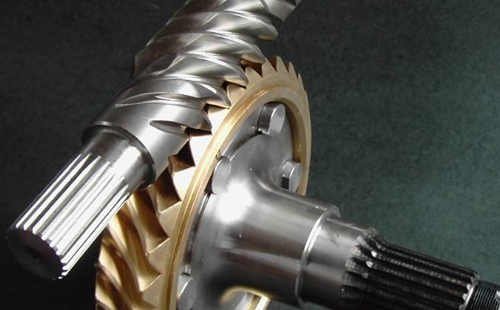
Worm gears are used for transmission between two cross shafts (the crossing angle is generally a right angle).Worm gear is equivalent to helical cylindrical gear, itsgearDistributed on the ring surface so that the gear can wrap the worm _ contact condition This is a characteristic of the worm wheel shape.The worm wheel is mostly made of tin bronze to reduce friction. The bronze texture is relatively soft. Generally, the material of the worm is harder than the worm wheel. The worm wheel is a passive wheel. The worm is the driving wheel and is generally connected to the motor. The soft worm wheel is damaged by the worm to protect the motor from burnt out.
The worm gear drive can get a large transmission ratio, which is more compact than the cross-axis helical gear mechanism.Worm drive is equivalent to spiral drive, which is multi-tooth meshing transmission, so the transmission is stable and the noise is small.It is self-locking.When the lead angle of the worm is smaller than the equivalent friction angle between the meshing gear teeth, the mechanism has self-locking property and can realize reverse self-locking, that is, the worm can only be driven by the worm, but the worm cannot be driven by the worm.For example, the self-locking worm mechanism used in hoisting machinery, its reverse self-locking property can play a safety protection role.The meshing tooth surfaces of the two wheels are in line contact, and its load-bearing capacity is much higher than that of the cross-axis helical gear mechanism.
The above worm gears and their basic parameters and function descriptions are for reference only. If you have more questions or related processing requirements, you can consult EP free of charge.
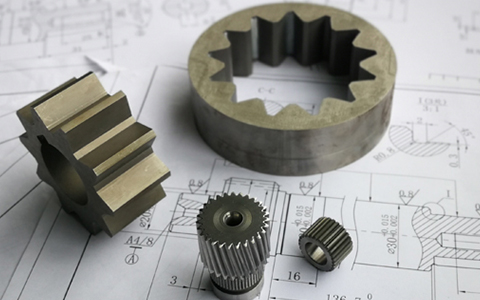
![Oil pump gear [customized]](ptogearboxes/xiaoE/upload/file/img/2020/10/5f9a8130d4e57.jpg)
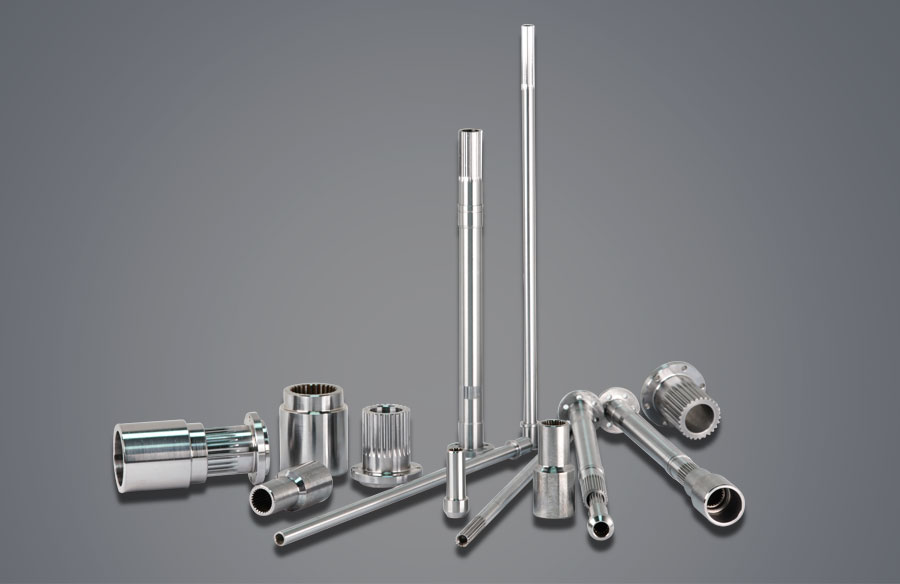
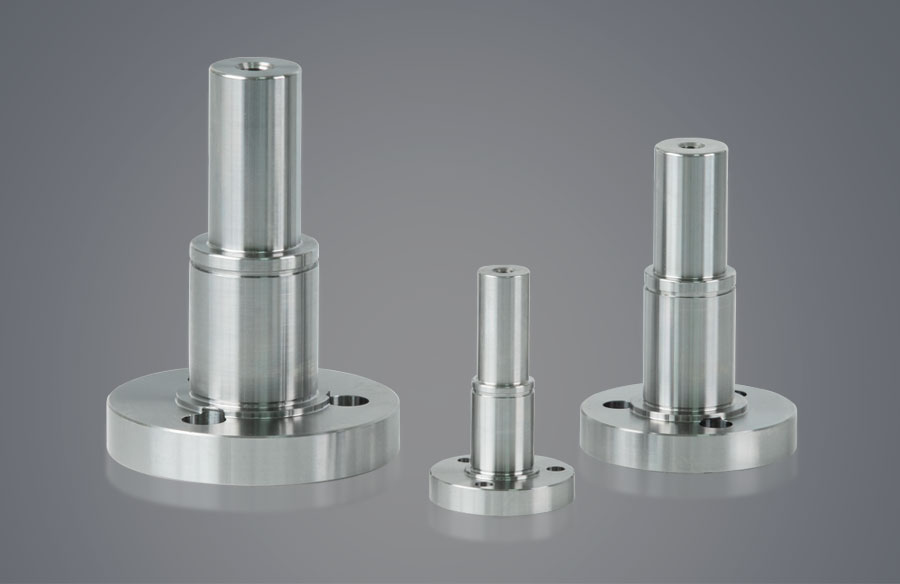
![Encoder gear [customized]](ptogearboxes/xiaoE/upload/file/img/2020/10/5f9a7c8ae4b27.jpg)