 Ever-Power Group


1,类别
How to control the noise of the transmission gear
Publication time: 2020-10-23 Website: https://ptogearboxes.com Edit: EP
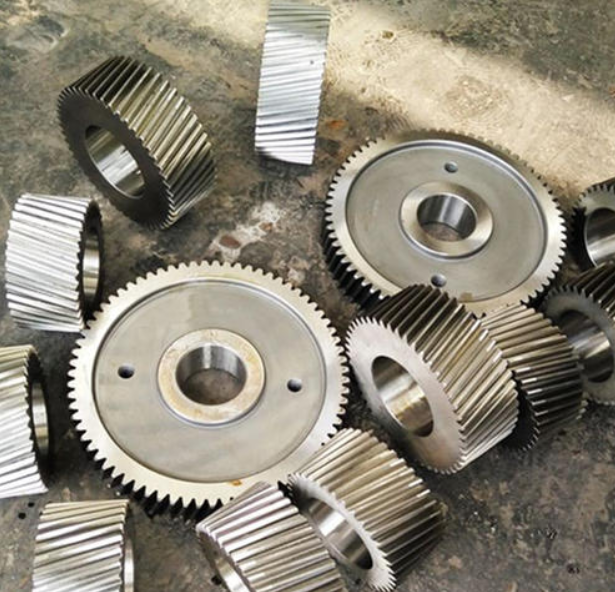
If you want to reduce gear transmission noise, the prerequisite is that you need to conduct a detailed analysis of the type and mechanism of noise.
Generally, gear transmission noise can be divided into two categories, one is self-sounding noise, and the other is acceleration noise.
Self-humming noise,It means that the gear teeth are affected by the meshing force when they are meshing, so all parts will vibrate, and the sound radiation will be formed.
Acceleration noise,It refers to the process of gear tooth meshing, because after it is subjected to a great impact, it will not only cause acceleration, but also disturb other different media, thereby forming acoustic radiation.
2,机理
From the perspective of open-tooth gear transmission, self-sounding noise is generated from different places such as the transmission shaft and wheel body, and acceleration noise is generated from the impact of gear teeth.From the perspective of closed gear transmission, after the gear body vibrates, and then the transmission shaft is used, the bearing will vibrate. On this basis, the vibration of the gearbox box wall will produce self-sounding noise.The acceleration noise is radiated by the gear box under the premise of radiating the air in the gear box.It can be seen from this that, in addition to the direct and close relationship between the gear transmission noise and the dynamic excitation of the gear tooth meshing, it is also related to the box structure and wheel structure.
The reasons for gear transmission noise are specifically manifested in the following points:
First, the contact accuracy between the gearbox and the gear train is relatively not very high, and the bearing clearance is not very reasonable.
Second, when processing gears, there is a relatively large error between the roughness of the gear and the shape of the gear.
Third, when designing gears, the structure of the gearbox is not scientifically reasonable, and the shape of the tooth profile is not repaired or the repair is not very strict.
3,Specific control measures for gear transmission noise
After a detailed analysis of the gear transmission noise, the following will effectively control the gear transmission noise from the aspects of gear materials and types, as well as the aggregate parameters.
Materials:
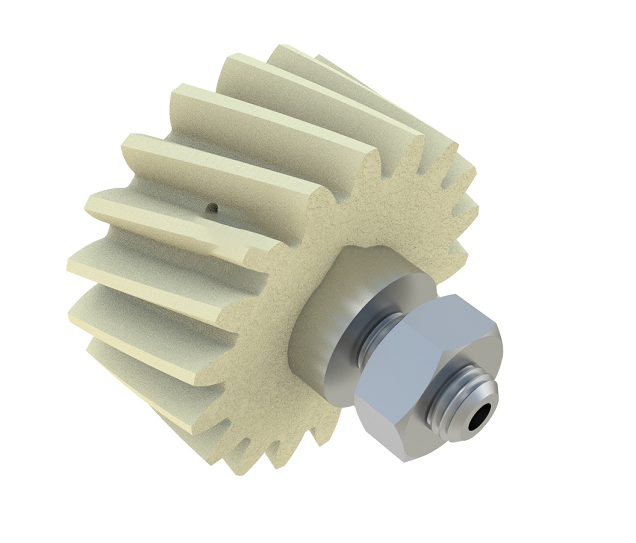
When selecting gear materials, some high-damping materials should be selected under the premise that its strength permits, so as to play a certain role in noise control.Because non-metallic materials can generally greatly reduce vibration and fundamentally reduce noise, on the basis of satisfying its requirements, the large gear should choose to use some metal materials, and the small gear should choose to use some non-metallic materials Only by doing this can the noise be controlled.
species:
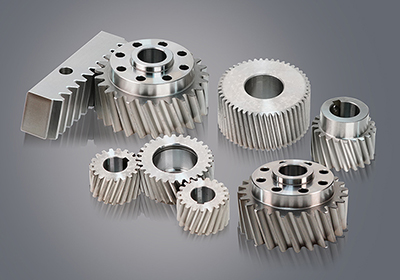
The meshing of gear teeth is often related to the type of gear. The spur gear teeth in the gear belong to the contact line of the gear width when they are in contact. Although the helical gear also belongs to line contact, it is different from the spur gear. The gear meshes through one end of the tooth tip. In the initial stage, the contact line slowly becomes longer, and then slowly becomes shorter, and finally ends when it is disengaged from the mesh.Because compared with spur gear transmission, helical gear transmission has many advantages. For example, the meshing line of helical gear transmission is relatively large and the load-bearing capacity is relatively high, etc., so the noise generated by helical gear transmission is naturally also Will be lower than the noise generated by spur gear transmission.Therefore, when selecting gears, helical gears should be selected as much as possible.
Collection parameters:
Modulus.If the load of the gear is relatively large, it is necessary to select a larger modulus. At this time, the bending deformation of the tooth root becomes a very important factor, and the larger the gear modulus, the greater the control The greater the effect of noise.If the transmission power of the gear is relatively small, then it is necessary to select and use a relatively small modulus. At this time, the gear machining error is a very important factor. Choosing a relatively small modulus can greatly increase the number of teeth of the gear. , Has extremely important significance for improving the balance of gear transmission, thereby reducing gear transmission noise.
Diameter and number of teeth.If the modulus of the gear has been determined, no matter whether the diameter is changed or the number of teeth is changed, the bending amount or elastic stiffness will change to different degrees.From a certain point of view, although there is no great relationship between machining accuracy and diameter, if the diameter gradually increases, the noise radiation area will naturally continue to increase.Therefore, the diameter of the gear must be minimized.
Control cabinet noise
In the series of processes of making the box, rubber should be applied to the inside of the box or the high damping materials should be selected and used as much as possible, so as to control the noise.In addition, the inner wall of the box can also be thickened to a certain extent, which can not only significantly improve its rigidity, but also greatly reduce the vibration, and finally control the noise.
<Previous article:Involute gear meshing problem

![Oil pump gear [customized]](ptogearboxes/xiaoE/upload/file/img/2020/10/5f9a8130d4e57.jpg)
![Encoder gear [customized]](ptogearboxes/xiaoE/upload/file/img/2020/10/5f9a7c8ae4b27.jpg)