 Ever-Power Group


The main failure modes of 5 kinds of gears and the corresponding solutions
Publication time: 2020-02-20 Website: https://ptogearboxes.com Edit: EP
Gear failures are usually concentrated in the gear teeth.The main failure modes of gear teeth are: tooth surface wear, tooth surface pitting, tooth surface plastic deformation, tooth surface gluing, and gear tooth fracture.
As a guaranteegearThe required working life of the transmission should be calculated and checked for strength.Generally, only two types of strength calculations are performed: the calculation of the contact fatigue strength of the tooth surface and the calculation of the bending fatigue strength of the tooth root.
5 types of gear failure forms and corresponding solutions:
XNUMX. Tooth surface wear
1. Phenomenon:
Oil dirty-abrasive wear-tooth profile damage-tooth root thinning (severe root)-broken tooth.
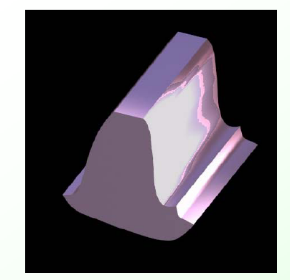
2. Reason:
When abrasive materials such as sand, iron filings, and non-metallic objects fall between the tooth surfaces, abrasive wear will occur.After the tooth surface is worn, the shape of the tooth profile is destroyed, causing shock, vibration and noise, and the tooth may break due to the thinning of the tooth thickness.
3. Corresponding solutions and measures:
a. Improve the hardness and smoothness of the tooth surface.
b. Keep the lubricating oil clean.
c. Adopt closed gears.
XNUMX. Tooth surface pitting
1. Phenomenon:
Cracks on the tooth surface-oil squeezing-metal peeling-pit-like pits appear on the tooth surface near the pitch line.
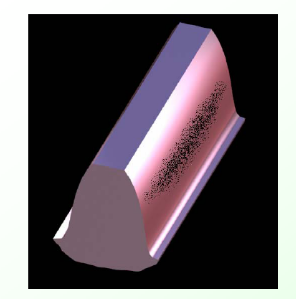
2. Reason:
a. Relatively soft, the hardness is less than or equal to 350HBS contact fatigue limit.
b. The tooth surface is subjected to alternating contact stress.
c. Closed transmission tooth surface with lubricating oil.
3. Corresponding solutions and measures:
a. Improve tooth surface hardness.
b. Increase the gear diameter or center distance.
c. Use suitable lubricating oil, etc.
XNUMX. Plastic deformation of tooth surface
1. Phenomenon:
The tooth surface loses its normal tooth shape.Plastic deformation is the permanent deformation of the tooth surface caused by the tooth material being in a yielding state under the action of excessive stress.
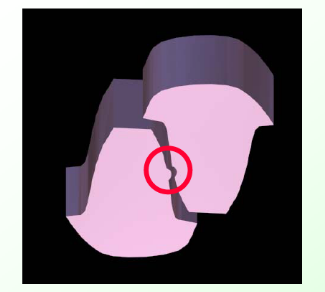
2. Reason:
a. The tooth surface is soft and heavy, and the tooth surface forms concave grooves and convex edges.
b. The friction force on the driving wheel respectively forms grooves toward the tooth top and the tooth root.
c. The friction force on the driven wheel forms a convex edge from the tooth top and the tooth root towards the middle.
3. Corresponding solutions and measures:
a. Improve tooth surface hardness.
b. Use high-viscosity lubricating oil.
Four, tooth surface gluing
1. Phenomenon:
Scars are formed on the tooth surface along the relative sliding direction.
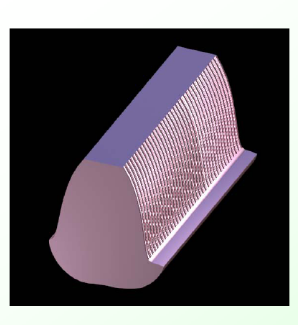
2. Reason:
a. The soft tooth surface is torn off with scars along the sliding direction.
b. The metal of the two tooth surfaces is in direct contact and bonding.
c. Relative sliding between tooth surfaces.
3. Corresponding solutions and measures:
a. Improve tooth surface hardness.
b. Reduce the modulus.
c. Reduce the sliding coefficient.
d. Reduce the tooth height.
e. Use lubricating oil with strong anti-glue ability.
Fifth, the tooth is broken
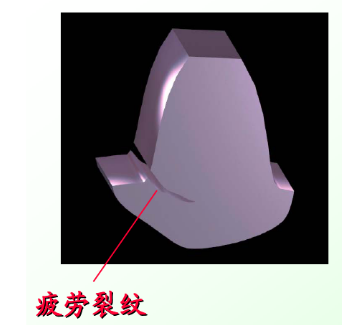
1. Phenomenon:
Crack-propagation-breaking occurs at the root of the tooth.
2. Reason:
a. The material is brittle.
b. Sudden overload or impact.
c. The root is subjected to alternating bending stress.
d. Stress concentration at the root.
3. Corresponding solutions and measures:
a. Increase the fillet radius of the tooth root.
b. Increase the gear modulus.
c. Use positive displacement.
![Oil pump gear [customized]](ptogearboxes/xiaoE/upload/file/img/2020/10/5f9a8130d4e57.jpg)
![Encoder gear [customized]](ptogearboxes/xiaoE/upload/file/img/2020/10/5f9a7c8ae4b27.jpg)