 Ever-Power Group
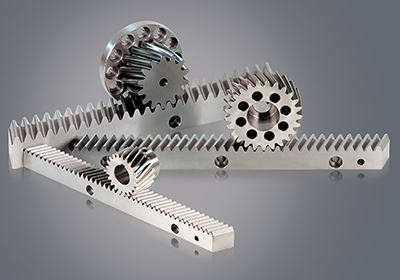
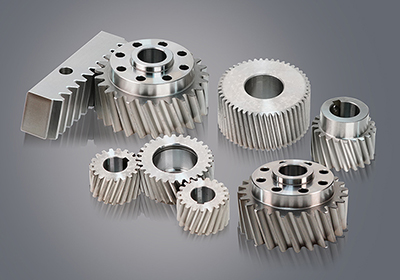
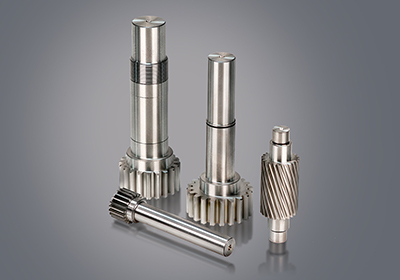
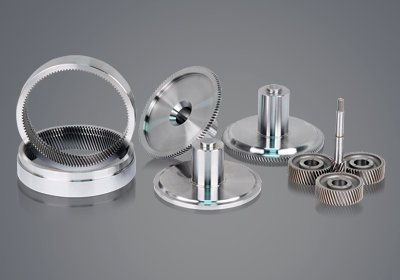


6 types of gear failure modes: tooth surface wear, tooth fracture, tooth surface peeling, plastic deformation, tooth surface bonding and fatigue pitting
Publication time: 2020-06-02 Website: https://ptogearboxes.com Edit: EP
There are 6 types of gear failure modes: tooth surface wear, tooth fracture, tooth surface peeling, plastic deformation, tooth surface bonding and fatigue pitting. The causes and damage characteristics are described below for reference.
1. Tooth surface wear:
the reason:
Iron filings, dust particles, etc. enter the meshing parts of the gear teeth to cause abrasive wear.
Damage characteristics:
The gear tooth contact surface has uniformly overlapping streaks along the sliding direction, which are more common in open gears, resulting in loss of tooth profile, thinning of the tooth thickness and broken teeth.
2. Broken gear teeth:
the reason:
The bending stress at the tooth root is the largest and concentrated, the load is excessively concentrated, repeated actions are repeated, and short-term overload.
Damage characteristics:
The overall fracture usually occurs at the tooth root, and the partial fracture usually occurs at one end of the tooth.
3. Flaking off the tooth surface:
the reason:
The tooth surface is subject to high alternating contact stress, local overload, material defects, improper heat treatment, low viscosity, and poor surface quality of the gear teeth.
Damage characteristics:
Brittle materials,Hardened gearCracks are generated in the surface layer or sub-surface layer, and then expand, and the material peels off the tooth surface in a sheet shape to form a spalling pit.
4. Plastic deformation:
the reason:
gearThe material is softer, the load bearing is greater, and the friction between the tooth surfaces is greater.
Damage characteristics:
The tooth surface produces plastic flow, which destroys the correct tooth profile curve.
5. Tooth surface gluing:
the reason:
Cold gluing occurs at low speed and heavy load, local pressure is too high, oil film collapses, and gluing occurs:
Thermal bonding occurs at high speed and heavy load, causing local instantaneous high temperature, causing oil film rupture, and local bonding and welding of tooth surfaces.
Damage characteristics:
The tooth surface metal is in direct contact under a certain pressure, and it will be torn off from the tooth surface with relative movement. According to the forming conditions, it can be divided into hot gluing and cold gluing.
6. Fatigue pitting:
the reason:
Under the action of alternating contact stress for a long time, the tooth surface contact strength and hardness are not high, the surface roughness is larger, and the lubrication is poor.
Damage characteristics:
Fatigue pit corrosion pits appear on the lower tooth surface near the pitch line and expand into a shell shape, which can spread over the entire tooth surface. Noise, wear and dynamic load increase, and they often occur in closed gears.
![Oil pump gear [customized]](ptogearboxes/xiaoE/upload/file/img/2020/10/5f9a8130d4e57.jpg)
![Encoder gear [customized]](ptogearboxes/xiaoE/upload/file/img/2020/10/5f9a7c8ae4b27.jpg)