 Ever-Power Group


Small modulus gears, do you know all this knowledge?
Publication time: 2020-01-03 Website: https://ptogearboxes.com Edit: EP
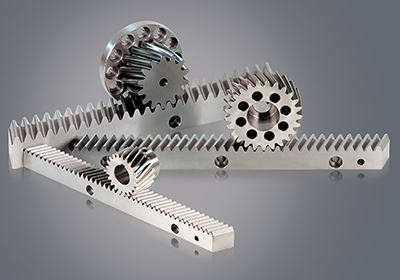
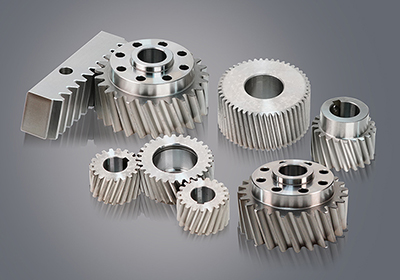
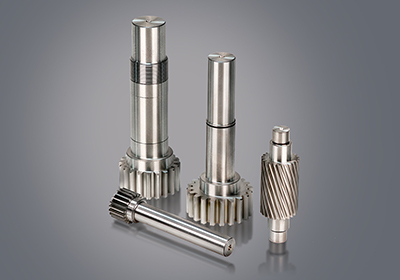
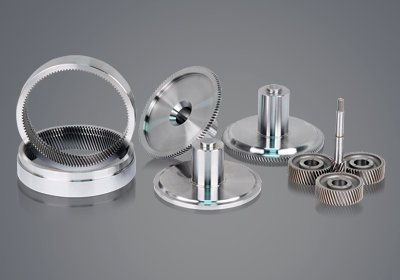
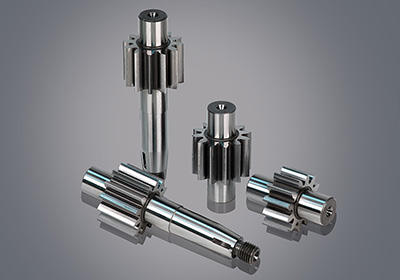
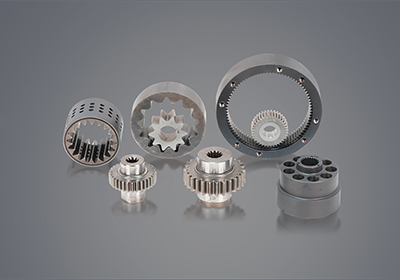
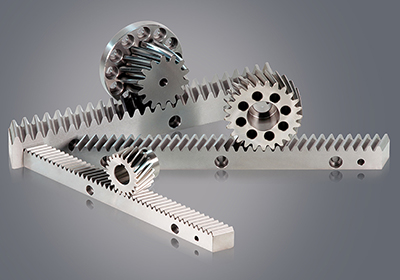
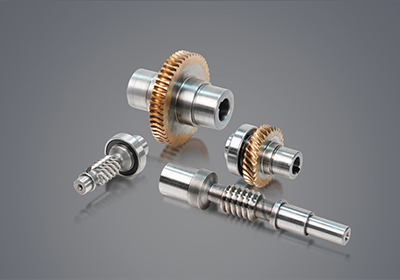
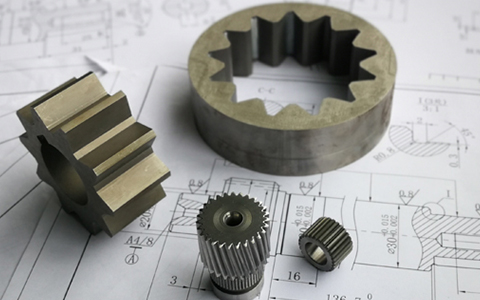
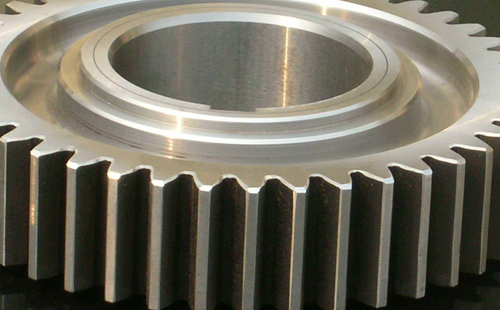
Small module gearThe application market is very wide, and it is worthwhile to invest more in production and processing.Small modulus gears are gears with a modulus of less than 1mm, and the processing principle is the same as that of medium and large modulus gears.
XNUMX. Material selection for small modulus gears:
1. High-strength, high-wear-resistant gears are made of alloy steel, such as aluminum blue steel.
2. General purposeCylindrical gear, Bevel gears are made of carbon steel or high-quality carbon steel for occasions where the peripheral speed is less than 3m/s.
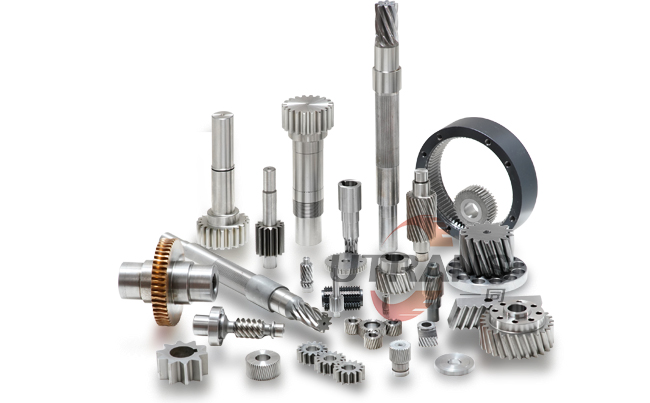
3. Stainless steel is used for the anti-corrosion gears.
4. The timer gear shaft is made of free-cutting steel, and the timer gear is made of copper material.
5. Stainless steel is used for the anti-corrosion gears.
6. Aluminum alloy is commonly used for instrument gears.
7. Light-duty gears are made of hard aluminum and super hard aluminum alloy.
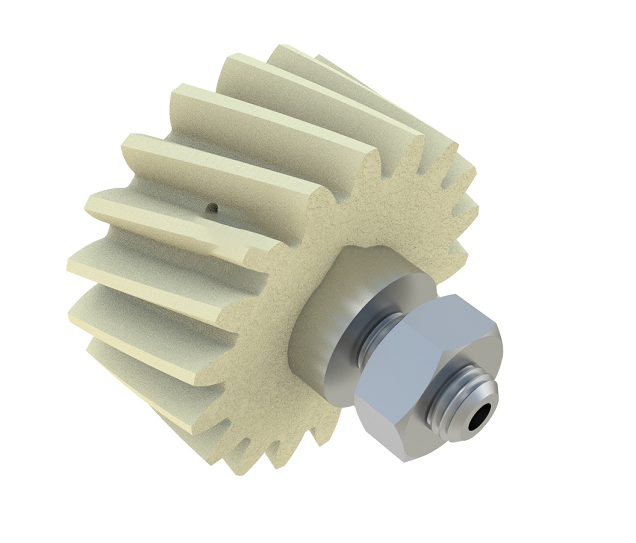
8. Engineering plastics such as fabric laminated bakelite (PS), nylon (PA), ABS, etc. are used to manufacture reducer gears that require low noise.
XNUMX. The principle of selecting materials for small modulus gears:
1. The material has good stability and is not easily corroded by chemical substances.
2. According to the working conditions of the small modulus gear, the strength and tooth surface hardness of the gear should be properly considered.
3. The material has good processing performance and is easy to achieve lower surface roughness.
XNUMX. Relevant standards for small modulus gears:
1. GB/T 2362-1990 Reference tooth profile of small modulus involute cylindrical gear
2. Accuracy of GB/T 2363-1990 small modulus involute cylindrical gear
3. The accuracy of GB/T 9821.3-1988 involute cylindrical gears for timers (the same standard is used with arc gears for timers)
4、GB/T 9821.6-1988 计时器用齿轮模数系列(模数m=0.05-1.00mm)
5、GB/T 9821.4-1988 计时器用渐开线圆柱齿轮基准齿形(适用于模数m=0.08-1.00mm,齿数大于7的齿轮)
6. The basic tooth profile of GB/T l0224-1988 small modulus bevel gears
7. GB/T l0225-1988 precision system for small modulus bevel gears
8. GB/T l0226-1988 basic tooth profile of small modulus cylindrical worm
9. GB/T l0227-1988 Small modulus cylindrical worm and worm wheel accuracy
10. JB305-1962 small modulus cylindrical gear and its transmission tolerance
11. JB306-1962 Tolerance of small modulus bevel gears
12. JB304-1967 small modulus gear original tooth profile elements
13. JB305-1967 small modulus cylindrical gear and its transmission tolerance
XNUMX. Technical requirements for small modulus gears:
1. The work is stable. During the transmission movement, especially the high-speed gears, the work must be stable, no impact, and low noise. This must control the change of the instantaneous transmission ratio.
2. Good contact performance. In order not to cause excessive contact stress due to uneven contact and premature wear of the tooth surface when transferring load, the gear working surface should have enough meshing contact area.
3. High movement precision, accurate and reliable transmission movement, to ensure the coordinated movement of the driven wheel and the driving wheel, so that the rotation angle error in each revolution does not exceed the allowable value.
4. Reasonable backlash. During the transmission process, there should be a certain gap between the non-working surfaces of the two meshing teeth to store lubricating oil, compensate for the changes in backlash caused by elastic deformation, temperature and gear manufacturing errors, and prevent gears from appearing " "Stuck" phenomenon, but the backlash can not be too large, so as not to cause backlash in the transmission.
XNUMX. Machining method of small modulus gear:
Commonly used processing methods are gear shaping method and gear hobbing method.According to the gear tooth processing, it is divided into two categories:
1. No-chip processing, including methods: cold-rolled gear, hot-rolled gear, die-casting and die-casting, etc.
2. There is chip processing, including methods: gear milling, gear hobbing, gear shaping, gear shaping, gear shaving, gear pulling, gear punching, gear grinding, gear polishing, gear honing, etc.
XNUMX. Processing characteristics of small modulus gears:
1. During the machining process, the tangential error of the machine tool has little influence. Because the radial accuracy and backlash accuracy of small modulus gears are high, external factors such as vibration, impact force, temperature change, etc. will directly affectGear processingAccuracy.There must be a better working environment in the workshop for processing small modulus gears.
2. There are many types of small modulus gear meshing. In addition to the commonly used involute gear meshing, there are also various modified cycloid gear meshing and simplified meshing. In order to ensure gear accuracy, various meshing gear teeth must be correctly processed. Shape curve, so there are special requirements for the accuracy of equipment and tools for processing small modulus gears.
3. The transmission torque of small modulus gears is small. Generally, strength calculation and stiffness calculation are not performed when designing gears.The determination of the gear modulus is usually selected by the structural size of the transmission mechanism.The cutting force, clamping force, supporting force and other factors in the machining process of small module gears sometimes cause gear deformation and fracture.Therefore, the reasonable formulation of the processing technology of small module gears to prevent the deformation and fracture of the gears during the processing is an extremely important factor to ensure the quality of the gears.
4. In the small module gear transmission, in order to reduce the volume and obtain a larger multi-stage transmission ratio, the pinion gear is required to have a small number of teeth.Gear processing with a small number of teeth is the characteristic of small module gear processing.
The above is the description of small modulus gears shared with you today, including but not limited to, if there are any deficiencies, please add them. If you have more questions or related needs, you can click on the consultation window on the right side of EP for free consultation. Your consultation is our constant The driving force for growth!
![Oil pump gear [customized]](ptogearboxes/xiaoE/upload/file/img/2020/10/5f9a8130d4e57.jpg)
![Encoder gear [customized]](ptogearboxes/xiaoE/upload/file/img/2020/10/5f9a7c8ae4b27.jpg)